
Exosome Therapy
Supporting beauty and wellbeing
from the cellular level.
IV drip, local injection, inhalation, skin booster and mesotherapy — a clear guide to exosome therapy tailored to your goals.

Overview
What are exosomes?
Exosomes are tiny particles released by cells, involved in communication between cells.
We look beyond the name "exosome": we choose our product by checking what has been confirmed, in what quantity and in what condition.
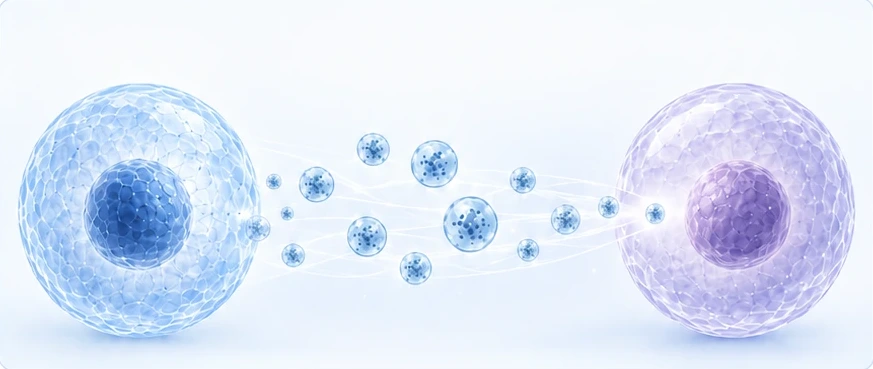
Information parcels made by stem cells
To understand exosomes, we think of them as parcels.
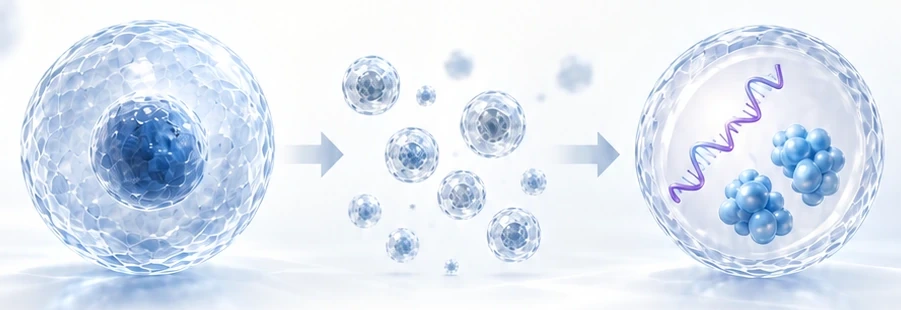
- A
Stem cells
The cells that create the information
- B
Exosomes
Tiny particles released by cells that carry the information
- C
miRNA & proteins
The contents of the parcel: information involved in how cells work
Exosomes are not stem cells themselves — which is why it matters to look at what is inside, not just the quantity.
Exosomes are released by cells in many different states, and depending on the information they carry, may also be involved in undesirable effects.
Quality Profile of Our ProductRead more
What we check, at a glance.
-
Particle count
1.31 trillionparticles
Particles per mL (mean)
-
CD9 / CD63
Confirmed
Exosome-associated markers confirmed, to exclude fragments and aggregates from evaluation.
-
Particle size
156.6nm
Mean particle size; size and condition of particles checked.
-
miRNA analysis
Top 100types
Composition and balance of the main miRNAs reviewed to assess safety and usefulness.
-
IPA analysis
Analysed
Relationships with bodily functions analysed; associations with conditions and functions comprehensively assessed.
-
Infection & safety
All negative
Bacteria, fungi, HBV DNA, HCV RNA, HIV DNA, herpes DNA, CMV DNA and mycoplasma DNA tested — none detected.
-
Passage number
≦ 3passages
Manufactured within 3 passages to maintain quality.
-
Culture method
3D culture
Produced in a three-dimensional culture environment.
-
Source cells
Bone marrow
Human bone-marrow-derived multipotent mesenchymal stromal cells; cell condition and infection risk checked.
- Particle concentration is based on a contract analysis by Theoria Science Inc. dated 24 August 2023 (calculated from a measurement at 600× dilution). It is not a measurement of the current production lot.
- Not every particle counted is necessarily an exosome, which is why we combine particle count, CD9/CD63 and size distribution.
Autologous Adipose Stem Cells vs ExosomesRead more
Not a question of better or worse — they are different methods.
Autologous adipose stem cells
Uses your own cells
Features
- Cells harvested from your own fat
- The cells themselves are cultured and administered
- May continue releasing information for some time after administration
Considerations
- Requires harvesting and culture
- Tends to be more costly
- May be affected by age and underlying condition
- Careful safety management is important
Exosomes
Uses the information cells release
Features
- Uses tiny particles released by cells
- Delivers information, not cells
- Quality-checked product can be administered intensively
Considerations
- No cell harvesting from you
- No waiting for culture
- As they are not long-lasting cells, treatment is planned while monitoring progress
What matters is not which is "better", but understanding what is used and how far it has been verified.
In either case, suitability, goals and treatment planning are discussed with the physician.
Menu & Price
Five Treatment Options
Our physician proposes the administration method best suited to your goals and condition.
-
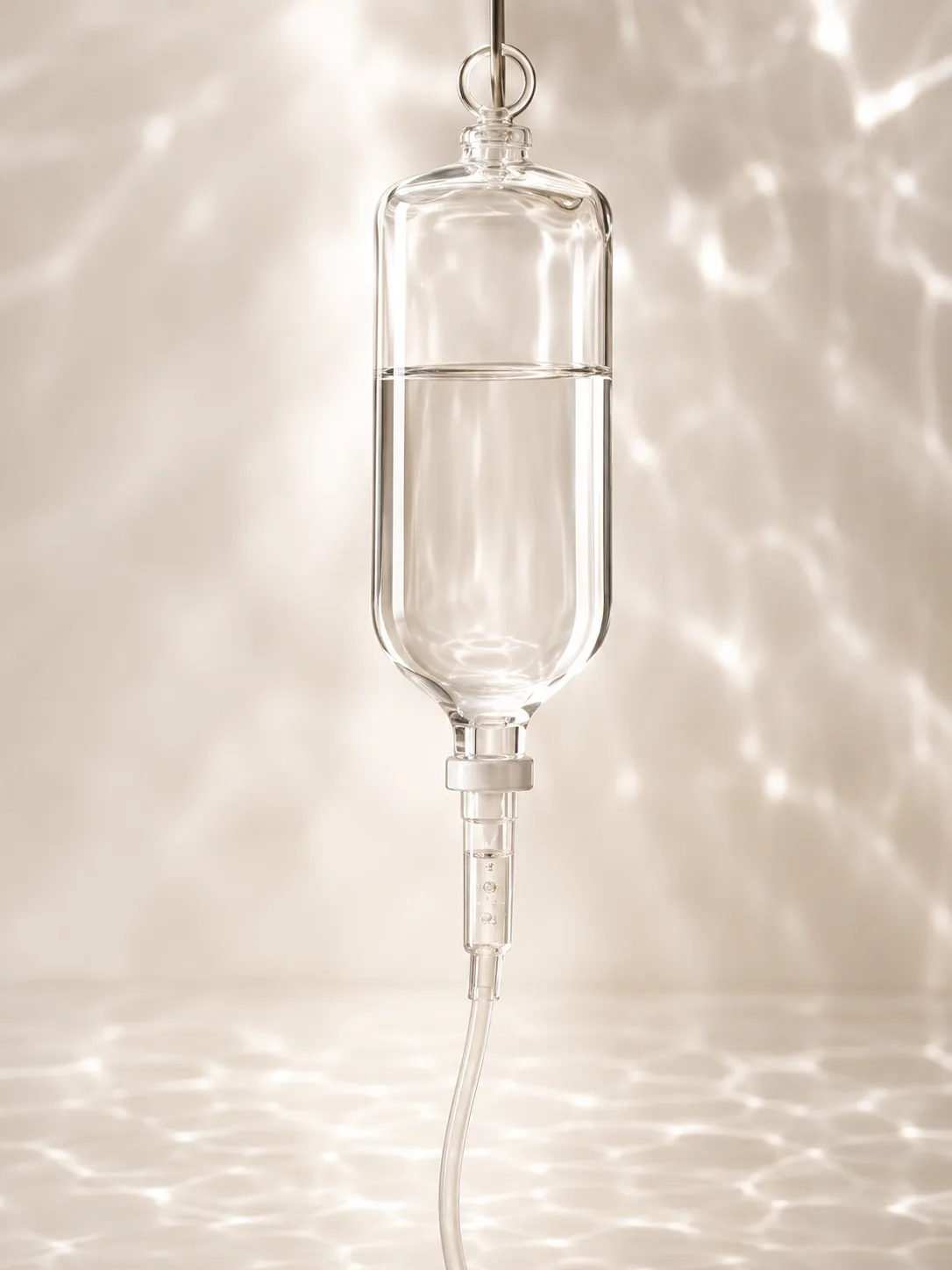
IV Drip
IV drip
A drip aimed at whole-body conditioning.
-

Local Injection
Local injection
The product is injected directly into the target area. The physician decides which areas are suitable after examination.
-

Inhalation
Inhalation
The product is turned into a fine mist and breathed in.
-
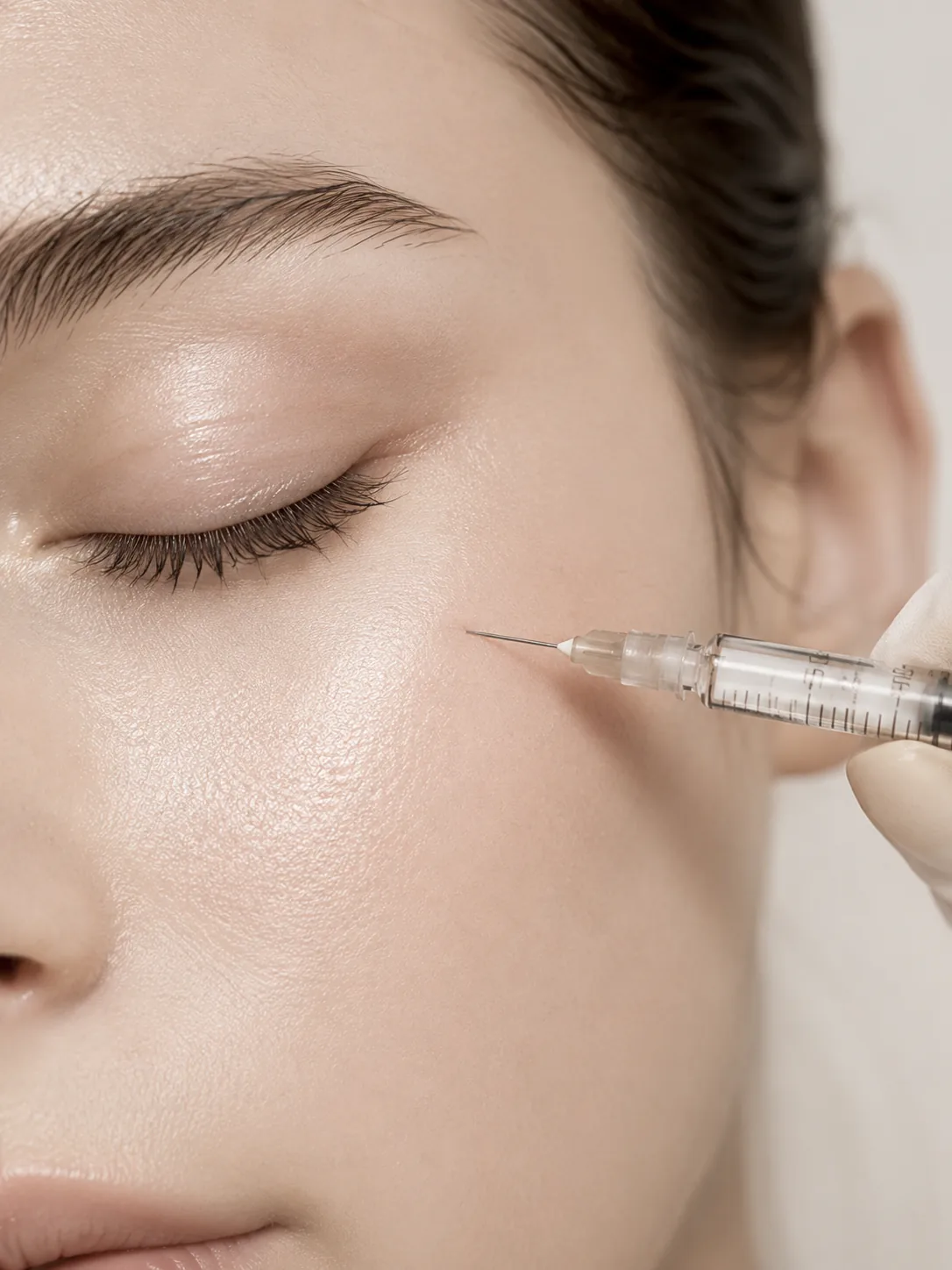
Skin Booster
Skin booster
Conditioning injections for the skin, aimed at firmness, radiance and smoothness.
-
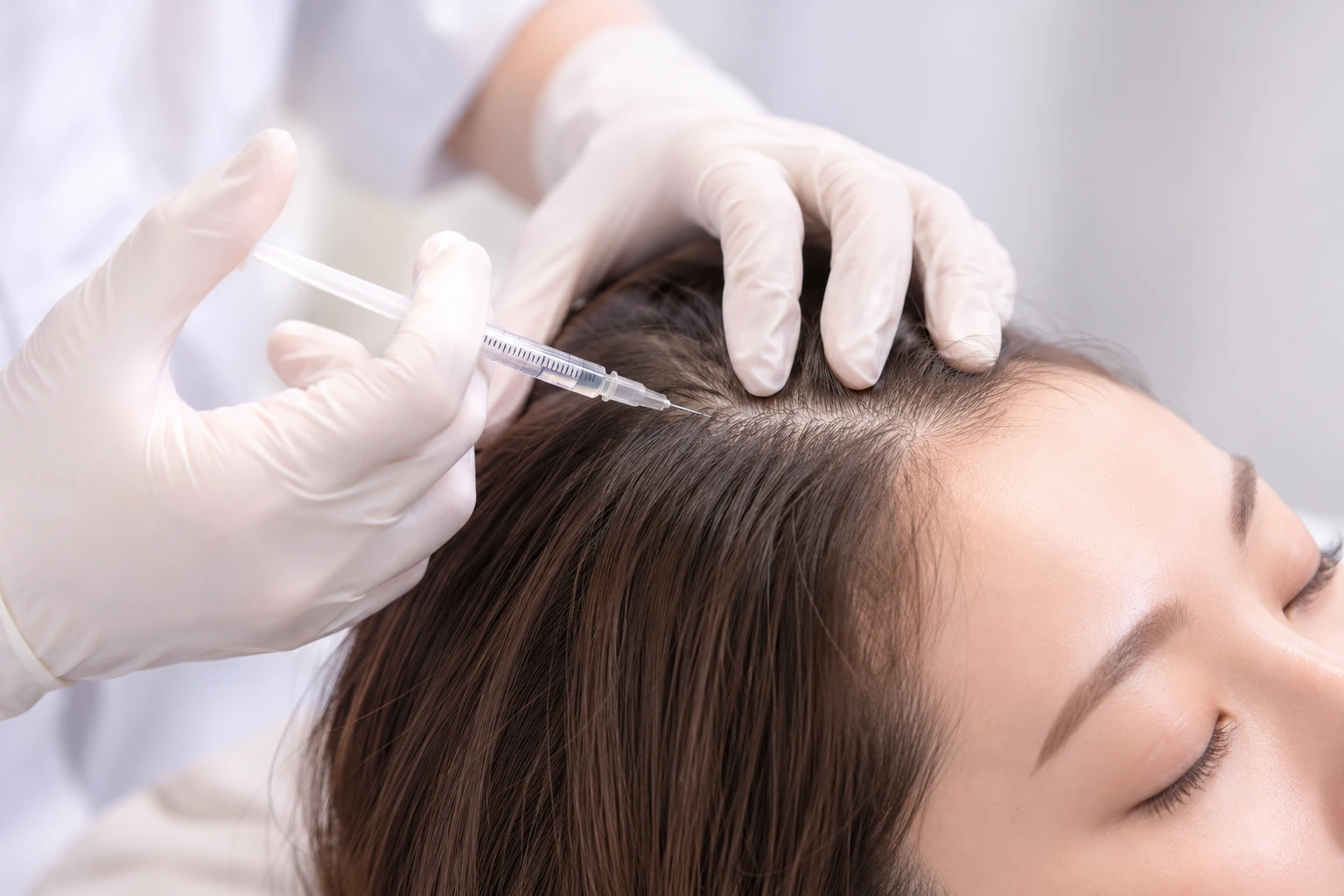
Mesotherapy
Mesotherapy (scalp)
An approach to the scalp aimed at a healthy scalp environment.
Price
The cost of exosome therapy depends on the product used and the dose. We will explain the details at your consultation.
Process
Treatment Process
- 01
Examination
We check your health, medical history and wishes.
- 02
Planning
The method and dose are planned to suit your goals and condition.
- 03
Administration
Carried out under a physician's supervision.
- 04
Follow-up
We discuss the next session while monitoring your progress.
- Administration
- Intravenous / local / inhalation (decided by the physician according to your goals and condition)
- Typical number of sessions
- 3–5 (planned together with the physician)
Precautions
Please Consult Us Carefully If You
- Are pregnant or breastfeeding
- Have an infection
- Have a serious chronic condition
- Are undergoing, or have a history of, cancer treatment
- Have allergies
- How long it takes to feel a change, and how it feels, varies. We cannot say that change will occur after a set number of sessions.
Risks & Possible Side Effects
- Pain, bruising or swelling at the injection site
- Fever or fatigue
- The efficacy and safety of this treatment have not been established.
- With inhalation, coughing, throat discomfort or shortness of breath may occur. If you have asthma or another respiratory condition, please consult us beforehand.
Information on Unapproved Products
- Unapproved status
- The exosome product used in this treatment is an unapproved medicine not approved under Japan's Pharmaceuticals and Medical Devices Act.
- Source of supply
- Obtained under the responsibility of the physician from 【要確認】 (name of manufacturer/distributor; or a statement that it is personally imported).
- Approved alternatives in Japan
- There are no approved medicines in Japan with the same ingredients and performance.
- Safety information from other countries
- At present, no exosome product has been confirmed as approved for therapeutic use in the United States or Europe, and safety information has not been sufficiently established. The U.S. Food and Drug Administration (FDA) has stated that there are no FDA-approved exosome products and issued a safety notification after serious adverse events were reported in patients treated with unapproved exosome products (December 2019).
- Relief system for adverse reactions
- Even if health damage occurs as a result of this treatment, it is not covered by public relief systems such as Japan's Relief System for Sufferers from Adverse Drug Reactions.
- Cost & risks
- Self-funded (not covered by insurance); efficacy and safety have not been established. Pain, bruising or swelling at the injection site, fever or fatigue may occur.
FAQ
FAQ
Q.Is exosome therapy covered by health insurance?
No. It is self-funded treatment.
Q.What effects can exosome therapy have?
Its efficacy and safety have not been established, and the time it takes to feel a change — and how it feels — varies. The physician will explain what can and cannot be expected, including the risks.
Reservation & Contact
Reservations & Enquiries
We are by appointment only, and consultation-only appointments are welcome.
There is never any pressure to proceed with treatment.